Documented properly, before anything is disturbed
A roof claim is won or lost on evidence gathered in the first few days. What an adjuster can see when they arrive, and what you can show them about what was there before, decides most of the argument.
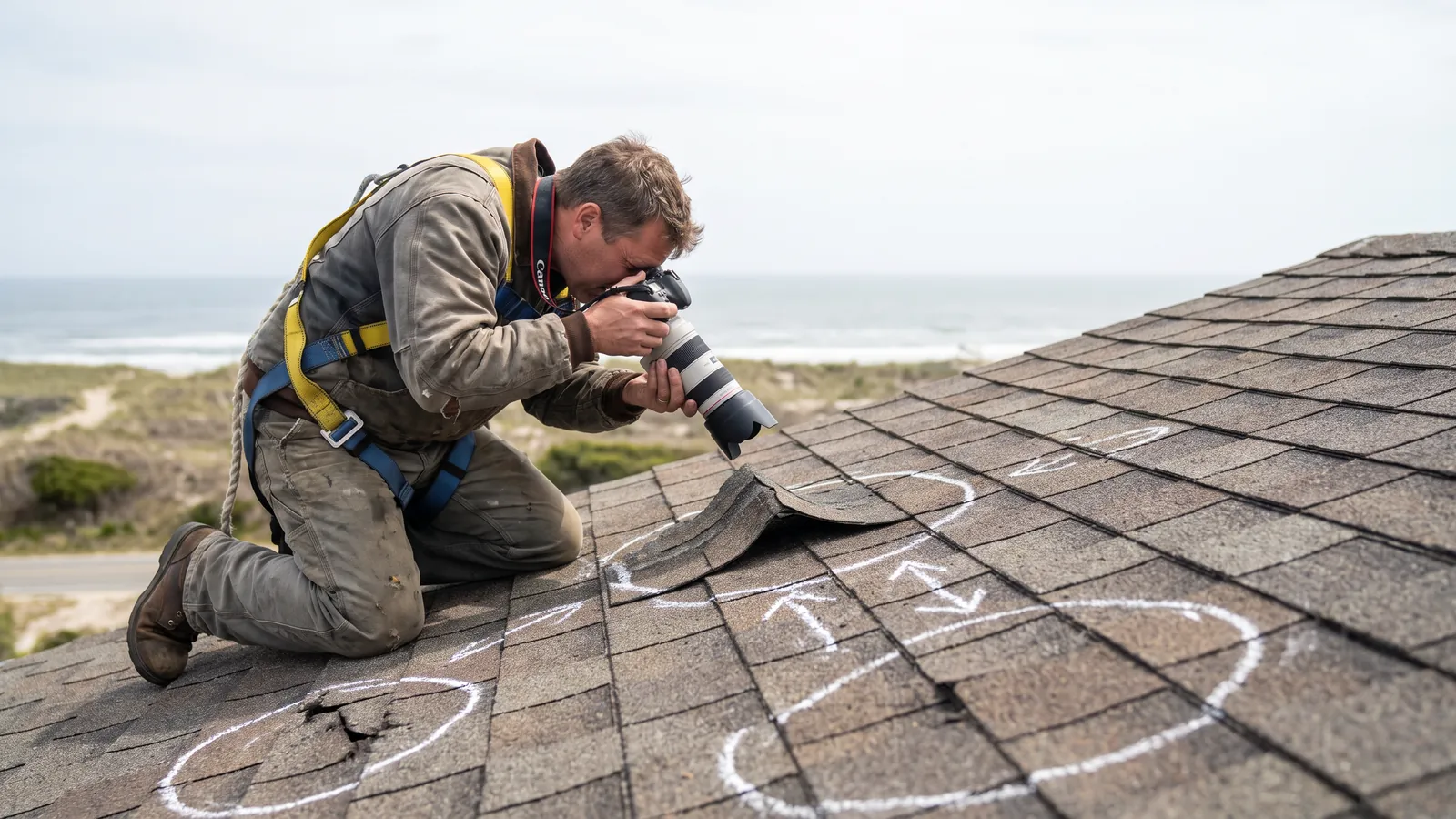
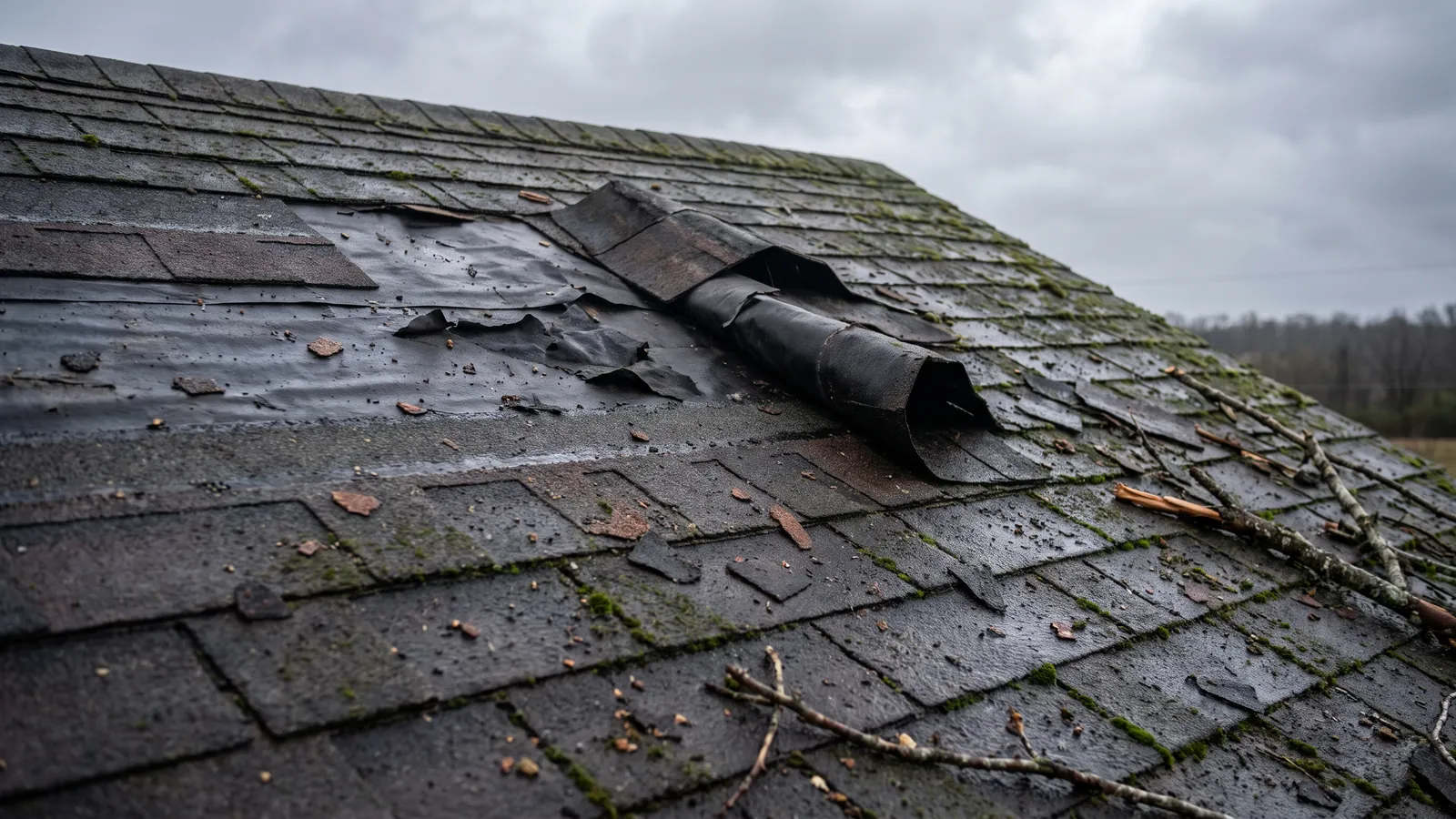
What an adjuster is looking for. Sudden, identifiable damage from a specific event — wind uplift, missing shingles, impact marks from hail, a tree limb strike. What they are looking to exclude is gradual deterioration: granule loss from age, curling from heat, a roof simply worn out. The line between the two is often genuinely arguable, which is why documentation matters so much. A roof photographed properly the day after a storm makes a strong case. The same roof photographed three weeks and two rain events later makes a weak one.
How we document it. Every slope, from the roof rather than the ground, straight on and at a raking angle because hail bruising and lifted tabs are nearly invisible head-on and obvious in low light. Chalk marking of individual hits where there is hail, with a scale reference. Close images of lifted seal strips, found by lifting tabs. The interior — ceiling staining, wet insulation, soft decking from the attic side. Collateral damage elsewhere on the property, because dented gutters, screens, soffit vents and air conditioning fins all corroborate a hail event and are often what persuades a doubtful adjuster. All dated, all referenced to the storm.
The itemised scope. Alongside the photographs, a written scope of what it takes to put right, broken into materials and labour, with the Gulfport permit and inspections as their own line items because they are a real cost the adjuster should be covering. We write what the repair actually requires. We do not pad it, and we do not shade a description toward whatever would make a claim easier.
Where coverage sits on this coast. Wind and hail cover is frequently written through the Mississippi Windstorm Underwriting Association, created in 1987 as the insurer of last resort for coastal homeowners who cannot get it on the open market. Wind and flood are separate policies with separate adjusters, and a coastal roof claim can genuinely involve both. Knowing which policy a given piece of damage belongs to before you file saves a lot of circular correspondence.
What we will not do. We are not public adjusters and we do not negotiate claims. We document accurately and provide an itemised scope, and we will meet your adjuster on site. We will not inflate an estimate, we will not describe damage that is not there, and we will not absorb, rebate or discount your deductible — that last one is fraud, it is offered constantly here after storms, and agreeing to it makes the homeowner a participant.
What's included
Photographed before anything moves
Every slope from the roof, straight on and raking, because hail bruising and broken seals are invisible head-on.
Marked with a scale reference
Individual hail strikes chalked and photographed against a measure, which is what an adjuster needs to size them.
Collateral damage recorded
Gutters, screens, soffit vents and air conditioning fins, because they corroborate a hail event the roof alone may not.
Interior documented too
Ceiling staining, wet insulation and decking seen from the attic, all part of the same claim.
Itemised scope supplied
Materials and labour separated, with the Gulfport permit and inspections as their own lines.
Accurate, not advocated
We document what is there and meet your adjuster. We do not adjust, negotiate, pad, or touch deductibles.
Insurance inspections prices on the Mississippi coast
| Job | Typical price | Notes |
|---|---|---|
| Inspection and photo documentation | $0 – $195 | Free; the written report is separate |
| Written claim report | $180 – $380 | Dated photographs, slope findings, itemised scope |
| Hail documentation with scale marking | $225 – $420 | Test squares marked and measured |
| Meeting the adjuster on site | $120 – $280 | Per visit, where you want us present |
| Supplement documentation | $140 – $320 | Where an adjuster's scope misses items |
| Interior damage assessment | $120 – $240 | Attic, ceilings and insulation |
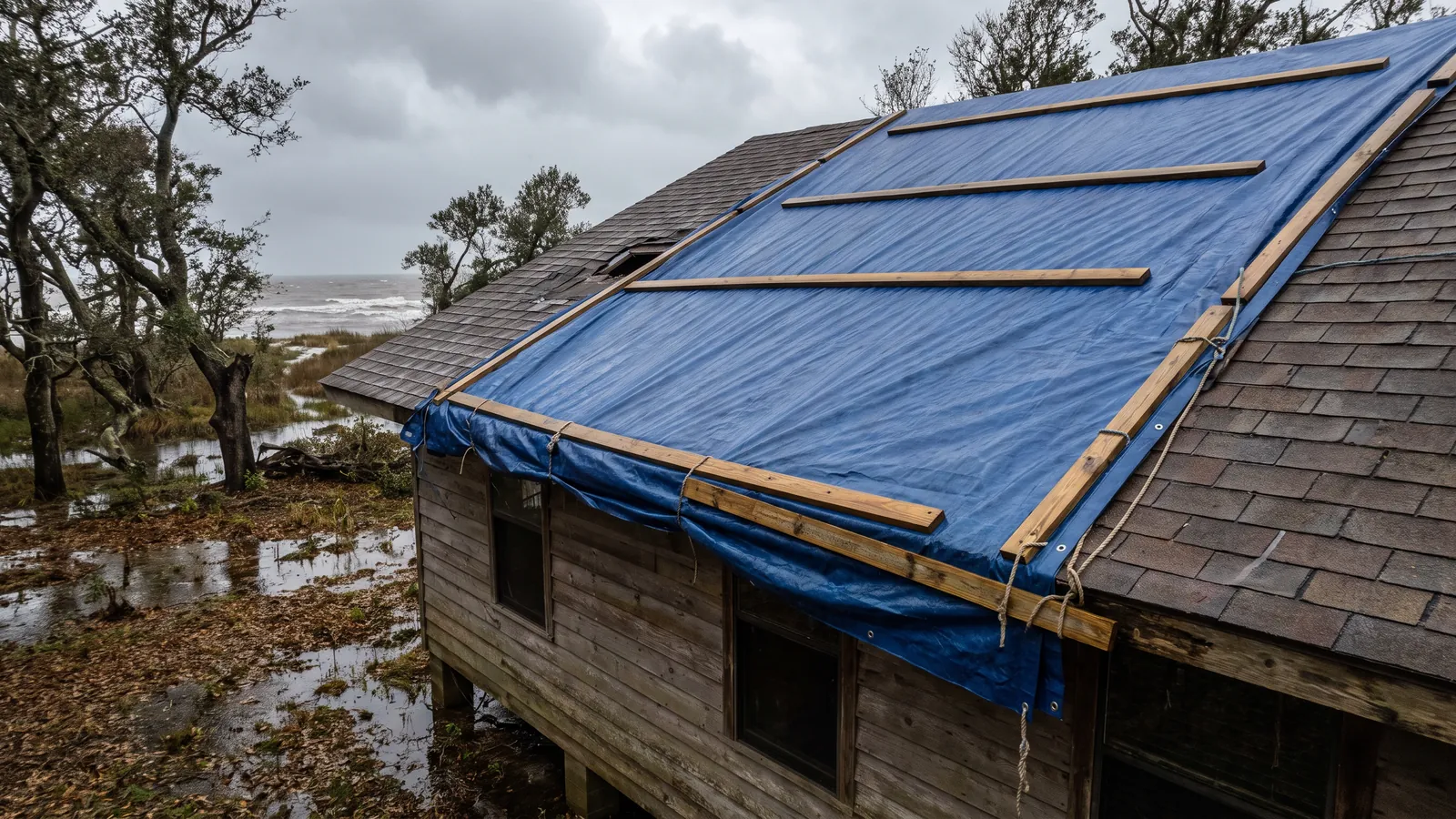
| Emergency tarp before the visit | $380 – $900 | See tarping |
| Re-inspection after repair | Included | Closes the file with before and after |
These are 2026 ranges for Harrison, Hancock and Jackson counties, to give you something to plan around. The real figure comes after someone has been on the roof, with the scope, the permit and the inspections itemised; written estimates hold for 30 days.
Recent work
Questions we get about insurance inspections
Should I file a claim at all?
Work out the likely repair cost against your wind or hail deductible first. On a coastal policy that deductible is often a percentage of the insured value rather than a flat figure, which can mean several thousand dollars. One slope of damage may fall under it. Damage across the roof usually does not. Get the figure, then decide.
What if the adjuster says it is wear and tear?
That is a common initial position and it is not necessarily the end of it. What helps is dated photographs tied to a specific named storm, collateral damage elsewhere on the property, and a detailed scope. You can request a re-inspection, and you can escalate within the carrier. We supply documentation; the negotiation is yours or a public adjuster's.
Can you handle the claim for me?
No, and anyone who offers to should give you pause. Acting as your representative in a claim is public adjusting, which is a licensed activity in Mississippi and not what a roofing contractor does. We document, we provide an itemised scope, and we will meet the adjuster. The claim stays between you and your carrier.
Someone offered to waive my deductible so the claim covers everything. Should I?
No. That is insurance fraud and the homeowner who agrees is a participant in it, not a bystander. It is offered routinely across Harrison and Hancock counties after storms. It is also a reliable sign that the company will not be findable when the work needs a warranty call.
Is wind damage covered if my roof is old?
Sometimes, with more argument. Many coastal policies settle older roofs on actual cash value rather than replacement cost, meaning depreciation comes off. Some have a separate wind or hail deductible, and some exclude cosmetic damage. Worth reading those three things in your policy before a storm rather than after.
How soon after a storm should I get this done?
Within days. Evidence degrades, subsequent rain adds damage that becomes hard to attribute to the original event, and after a widespread storm the whole coast is competing for adjusters and roofers at once. Photograph it yourself immediately even if you cannot get an inspection booked for a week.