The missing shingles are the obvious part. The loose ones either side are the expensive part.
After a storm, a roof tells you less than you would think from the ground. What is gone is visible. What has been lifted, broken at the seal strip and dropped back into place is not, and that is what fails in the next blow.
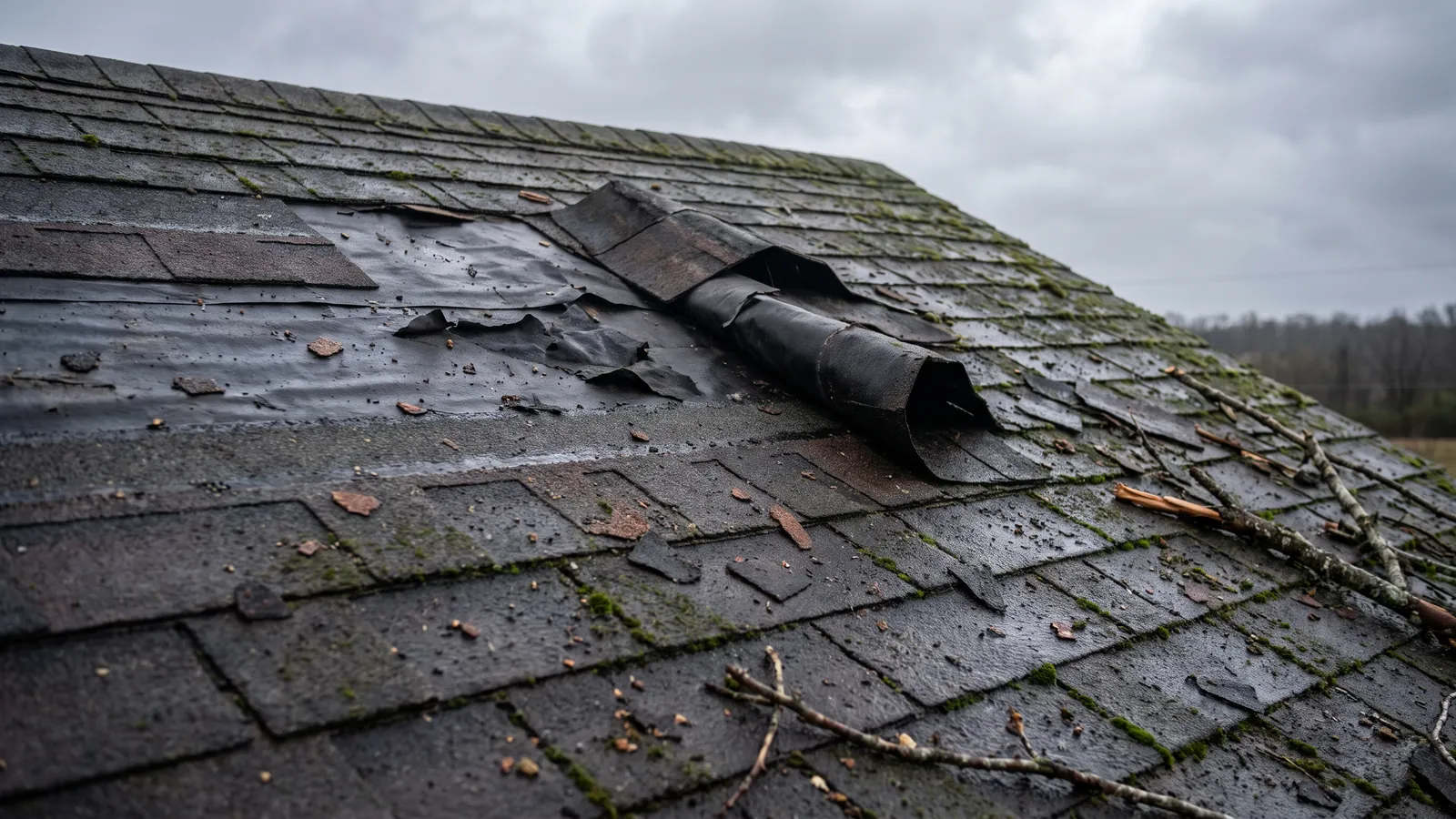
Wind does not take a roof evenly. It lifts at the edges — rakes, eaves and ridges — where pressure is highest, gets under a tab, and peels. The result from the lawn is a bare patch of underlayment. The result on the roof is a bare patch surrounded by a zone of shingles whose self-seal strips have broken, which look completely normal, lie flat, and will leave in the next storm because nothing is holding them down any more. Lifting a tab by hand across that zone is how you find them, and it is the step that separates a repair that lasts from one that gets redone after the next system comes through.
This coast knows the pattern. Zeta came ashore in October 2020 with 80 mph sustained winds and gusts to 103 mph at Bay St. Louis and did something in the order of $650 million of damage across Mississippi. Ida spawned an EF1 through Pass Christian and Diamondhead in 2021 and EF0s at Gulfport, Biloxi and Pascagoula. Francine brought 49 mph gusts to Gulfport in September 2024 and left around 60,000 Mississippi customers without power. None of those were Katrina. All of them took roofs.
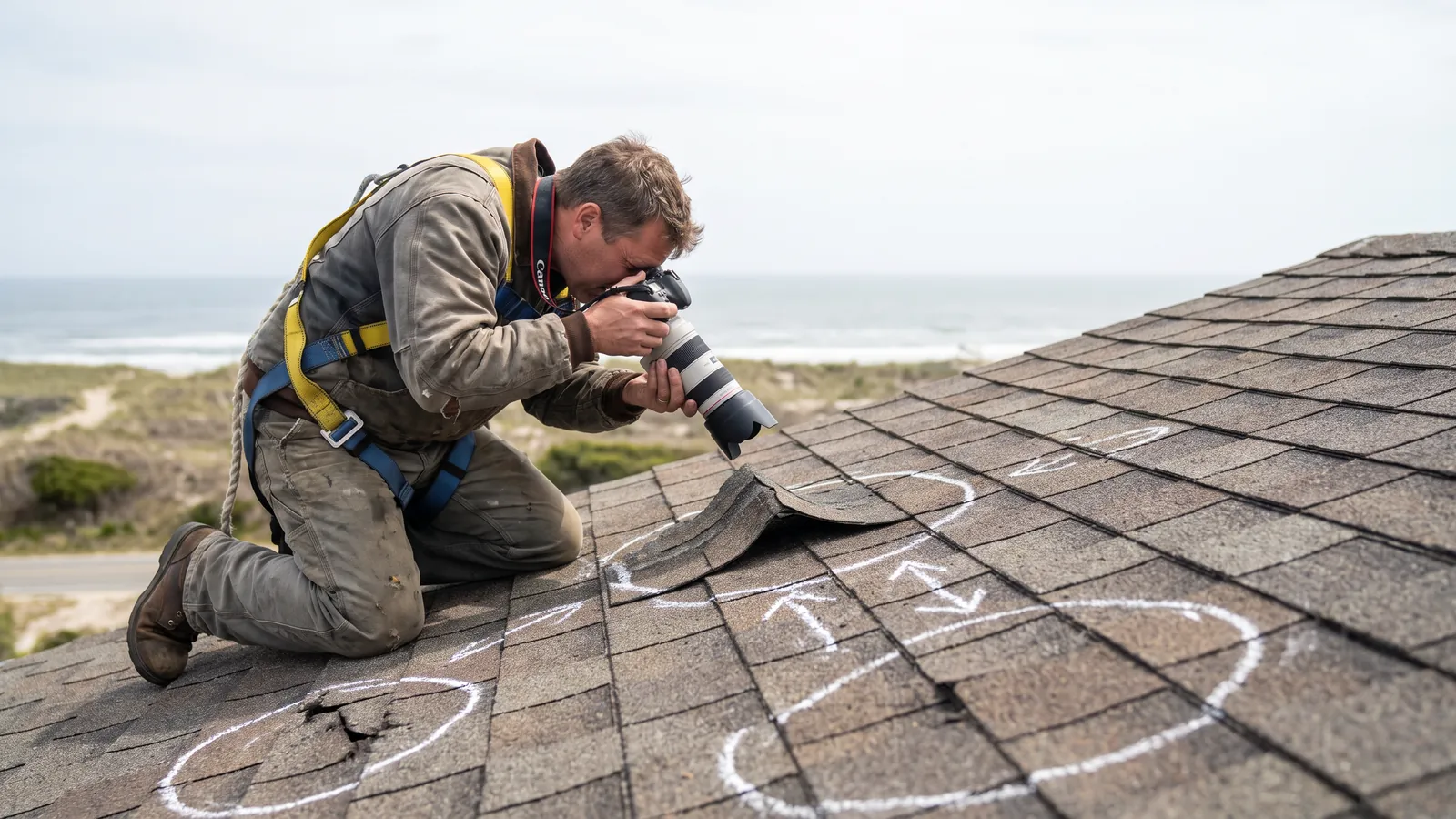
Document before you repair. This matters more than anything else on this page. Photograph every slope from the roof, not the garden, in good light, straight on and at an angle. Photograph the interior damage. Note the date and the storm. Do this before anybody puts a tarp on, and certainly before anyone starts replacing shingles, because an adjuster who arrives to a repaired roof has nothing to assess. We photograph everything as a matter of course and give you the file, whether or not a claim follows.
About the people who knock on your door after a storm. They arrive within days across Harrison and Hancock counties, they are often from several states away, and the offer that should end the conversation is any version of covering, waiving, absorbing or discounting your deductible. That is insurance fraud, and the homeowner who agrees is a participant in it. The other tell is urgency: a contract pushed at you on the first visit, with a discount that expires. A real roof will still need repairing next week.
What's included
The lifted zone checked by hand
Tabs lifted around the obvious damage to find the shingles whose seal strips broke but which are still lying flat.
Documented before disturbed
Every slope photographed from the roof in the form an adjuster expects, with the date and direction recorded.
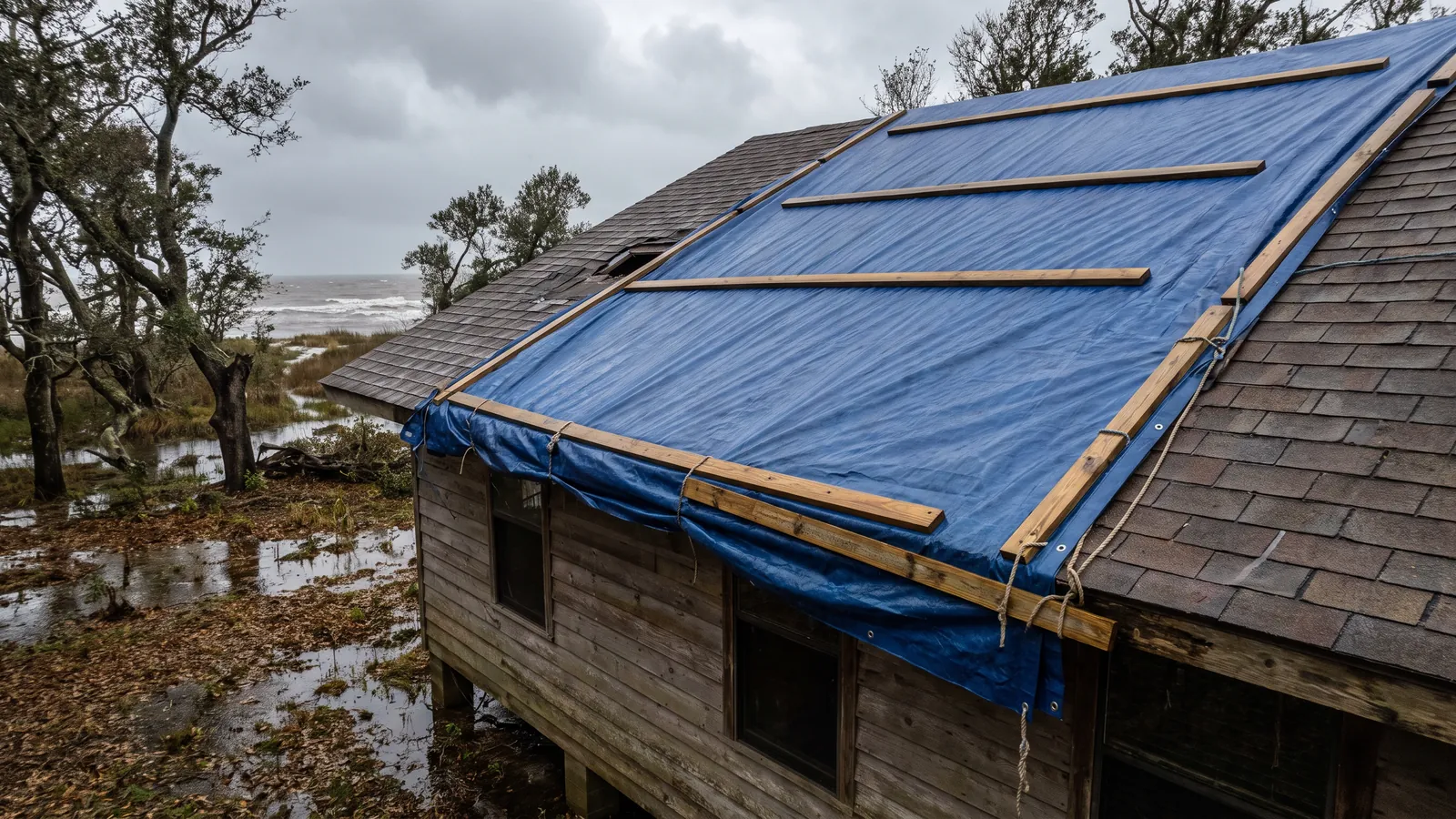
Tarped the same visit where needed
If the deck is exposed, it gets covered before the claim conversation, not after.
Interior damage recorded
Ceiling staining, wet insulation and any soft decking photographed, because those are part of the same claim.
Repaired to the current code
Replacement shingles fastened with six nails to the Class H requirement, not matched to whatever the old roof got away with.
No deductible games
We document what is there. We do not inflate a scope and we never absorb a deductible, whoever suggests it.
Storm damage roof repair prices on the Mississippi coast
| Job | Typical price | Notes |
|---|---|---|
| Storm inspection and photo report | $0 – $195 | Free; written claim report priced separately |
| Emergency tarp | $380 – $900 | By area covered; see tarping |
| Wind-damaged section, single slope | $480 – $1,400 | Includes the lifted courses around the gap |
| Multiple slopes, partial reshingle | $1,600 – $4,200 | Where damage is spread across the roof |
| Ridge cap replacement | $420 – $1,100 | Per ridge run |
| Drip edge and rake replacement | $380 – $980 | Common after uplift at the edges |
| Decking replacement, per sheet | $160 – $290 | Permit and nailing inspection where required |
| Full replacement after major damage | $12,500 – $21,000 | See replacement |
These are 2026 ranges for Harrison, Hancock and Jackson counties, to give you something to plan around. The real figure comes after someone has been on the roof, with the scope, the permit and the inspections itemised; written estimates hold for 30 days.
Recent work
Questions we get about storm damage roof repair
How do I know if my roof was damaged if nothing is obviously missing?
You often cannot from the ground, and that is the problem. The telltale signs visible from below are granules collecting at the downpipe outlets, a shingle edge that looks slightly raised against the course below, and debris in the garden that came off the roof. Anything more definite needs somebody on the roof lifting tabs.
Should I claim, or pay for it myself?
Compare the repair against your wind or hail deductible, which on a coastal policy is often a percentage of the insured value rather than a flat figure and can be several thousand dollars. One slope of wind damage may fall below it. Damage across several slopes usually does not. Get the figure first, then decide.
Someone knocked and offered to handle my whole claim. Is that normal?
It is common after a storm here and it is worth being careful with. Some are legitimate. The ones to refuse outright are anyone offering to cover or waive your deductible, anyone asking you to sign a contract or an assignment of benefits on the first visit, and anyone who cannot give you a Mississippi State Board of Contractors licence number you can check.
How long do I have to file a claim?
Policies set their own deadlines and they are usually measured in months rather than years, but the practical answer is sooner. Evidence degrades, further rain adds damage that is then hard to attribute to the original storm, and after a widespread event the adjusters get busy. Photograph it now even if you are undecided.
Will you work with my insurance company?
We document the damage accurately and supply an itemised estimate in the form adjusters expect, and we will meet the adjuster on site. What we do not do is act as your public adjuster, negotiate the claim on your behalf, or characterise damage to suit a particular outcome. Coverage is between you and your carrier.
The storm was a month ago and I only just noticed. Too late?
Not necessarily. Damage from a specific named storm is usually still attributable, particularly on this coast where the dates are well documented. It is harder than it would have been, which is an argument for an inspection after any significant wind rather than waiting for a ceiling stain.