Roofing in D'Iberville, a city younger than most of the roofs around it
D'Iberville only incorporated in 1988 and its median house was built in 2003, which makes it one of the newest municipalities and newest housing stocks on the coast. It sits on the north shore of the Back Bay, which changes both the weather exposure and the kind of damage we see.
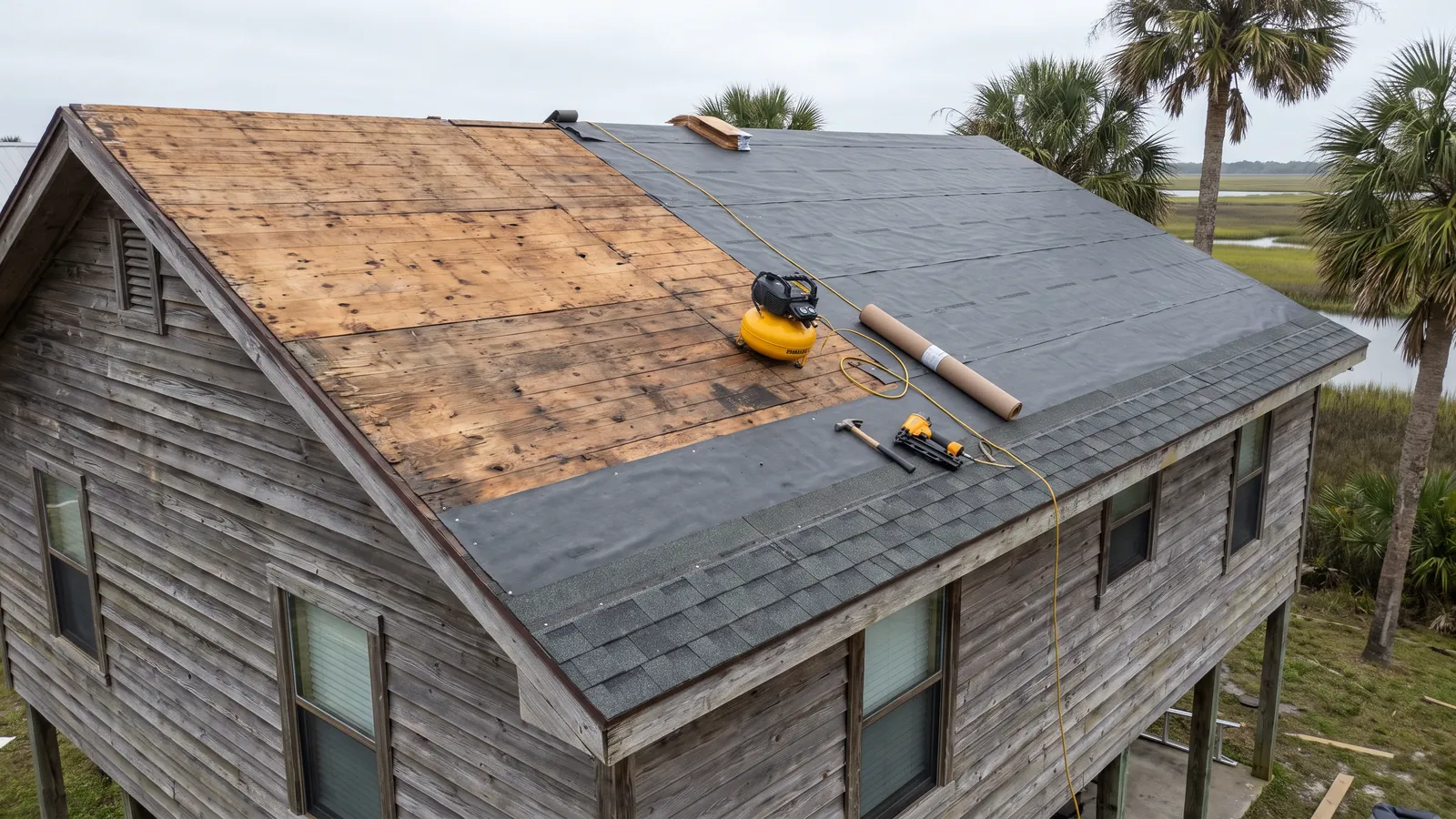
With 13,557 residents and 59 per cent owner-occupancy, D'Iberville is substantially a commuter and family city built out during the two decades either side of 2000 and then again after Katrina. The practical upshot for roofing is that most of what we work on here was built under or close to the current code: decks nailed properly, edge detail specified, and roofs now entering their twenties. Tear-offs are generally clean and predictable, which makes quoting straightforward and surprises rare.
The Back Bay position is the local variable. Being on the north side of the bay rather than the open Sound means slightly less direct wind exposure from the south, but it brings its own problems: more tree cover, which means more debris impact and more organic growth on north-facing slopes, and a surge and flood profile driven by water pushed up into the bay rather than arriving straight off the Gulf. Roofs here take fewer direct hits from salt spray and more from wind-driven debris.
The tree cover is worth dwelling on. Overhanging limbs abrade shingles, drop debris into valleys and gutters, and keep slopes damp enough for algae and moss to establish. A north-facing slope under oaks in this climate ages visibly faster than the south-facing slope of the same roof. Trimming back and keeping the gutters clear is the cheapest life extension available on most D'Iberville roofs.
Commercially, the city has grown quickly along the highway corridor, which brings low-slope membrane work on newer retail and light industrial buildings — mostly young roofs where the problems are detailing and penetrations rather than age.
What we do in D'Iberville
Young roofs, clean tear-offs
Most of the stock was built under or close to the current code, so the deck underneath is usually sound.
Tree damage anticipated
Overhanging limbs abrade shingles and fill valleys, and north slopes under oaks age faster than the rest of the roof.
Back Bay exposure understood
Less direct salt spray than the open Sound, more wind-driven debris, and a different surge profile.
Valleys and gutters kept clear
The cheapest life extension available on a roof with trees over it, and the most commonly skipped.
Algae and growth treated properly
Damp shaded slopes grow things that hold moisture against the shingle; cleaning them wrongly does more harm than good.
Newer commercial detailing
Highway-corridor retail and light industrial, where the faults are penetrations rather than membrane age.
Neighbourhoods and roads we cover
- The neighbourhoods along the Back Bay shoreline
- Subdivisions built through the 1990s and 2000s
- The highway corridor and its commercial buildings
- Streets toward the Biloxi boundary south of the bay
- The northern residential areas
- Developments near the interstate interchange
- Older pockets predating the 1988 incorporation
- Retail and light industrial along the main routes
Roofing services in D'Iberville
- Roof repair, leak tracing, storm damage, emergency call-outs and tarping
- Full replacement, Class H shingle, metal roofing and FORTIFIED upgrades
- Inspections, insurance documentation and claim support
- Flat and low-slope, commercial, gutters and soffit and fascia
Questions from D'Iberville homeowners
There are black streaks on my north-facing slope. Is that damage?
It is algae, and it is nearly universal on shaded slopes in this climate. It is not structurally damaging in itself, but it holds moisture against the shingle, which over years is not helpful. It can be treated, though pressure-washing a shingle roof is a reliable way to remove the granules and take years off it — so the method matters.
Should I cut back the trees over my roof?
Yes, where you can. Overhanging limbs abrade shingles when they move in wind, drop debris that blocks valleys and gutters, and keep slopes damp. Trimming back is the single cheapest thing most D'Iberville owners can do for their roof, and it also removes the limb that comes through in a storm.
Is being on the Back Bay better or worse than the beachfront?
Different. Less direct salt spray and marginally less wind exposure from the south, which helps. More tree cover, which means more debris impact and more growth on shaded slopes. And a surge profile driven by water pushed up into the bay, which is a flood question rather than a roof one.
My house is from 2003. Is the roof due yet?
It is at or near the end of a typical architectural shingle's life on this coast, so worth an inspection even without symptoms. The good news is that a 2003 deck is generally nailed to a proper schedule, so when the time comes the tear-off is usually clean and the quote holds.
Do you do commercial work in D'Iberville?
Yes — the highway corridor has grown quickly and there is a good deal of newer retail and light industrial with low-slope membrane roofs. On buildings that young the faults are nearly always penetrations and curb flashings rather than the membrane itself.
Nearby: Biloxi · Ocean Springs · Gautier · full service area