Fifteen years in, an exposed-fastener roof starts weeping at every screw line at once
Metal roofs rarely fail in the field. They fail at the fixings, the laps and the cut ends — the places where something other than the panel is doing the work of keeping water out.
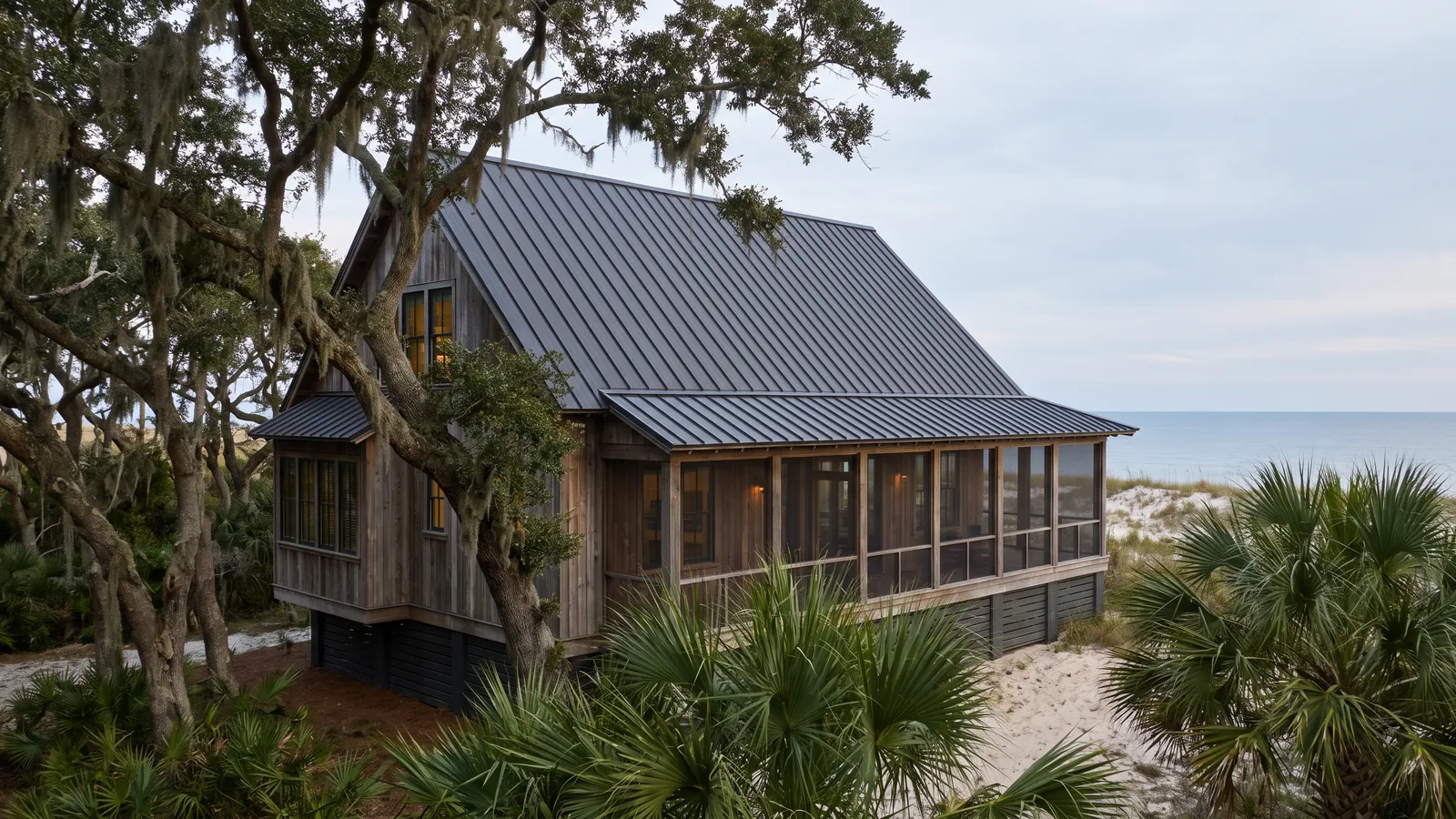
The washers. On an exposed-fastener roof every screw head sits on a neoprene washer that compresses against the panel to seal the hole. In Gulf sun and salt air those washers harden, crack and shrink, typically starting somewhere around the fifteen-year mark. When they go, they go across the whole roof within a season or two, because they all went on at the same time and have had the same exposure. The symptom is a roof that was perfect and now shows damp patches on the ceiling in several unrelated places at once. The fix is a fastener campaign: every screw replaced, usually one gauge larger so it bites fresh metal, with new washers.
Backed-out screws. Metal expands and contracts a great deal across a day in this climate, and that movement slowly works fasteners loose. A screw standing proud by a few millimetres is no longer sealing. Walking a roof and looking along the screw lines against the light picks these out quickly, and re-driving or upsizing them is cheap compared with what the water does.
Seams and laps. On standing seam, a mechanically crimped seam that was not fully closed, or a clip that has worked loose, lets wind-driven rain track along the seam. On exposed-fastener panels the side lap relies on the screw pattern being right; too few fasteners and the lap flutters in wind and opens. Both are repairable without replacing panels if caught before the panel deforms.
Rust at the ends. A coated steel panel is protected on its faces but bare at the sheared end. On this coast that cut edge is where corrosion begins, usually at the eaves where it stays damp longest. Caught early it is a treatment and a closure detail. Left for years it eats back into the panel and becomes a replacement.
Penetrations. Pipe boots, vents and anything else going through a metal roof are the other recurring source. Boots designed for metal have a flexible base clamped and sealed to the panel profile; a shingle boot slapped onto a ribbed panel will leak within a year. We see a lot of those.
The honest part: on a roof where the washers have gone and the cut ends are corroding and the panels have oil-canned from thermal movement, a repair campaign is money spent to delay a decision. We will say so and give you the replacement figure alongside the repair figure.
What's included
Screw lines walked and sighted
Every run checked along the light for proud, backed-out or weeping fasteners rather than chasing the one stain you reported.
Upsized fasteners where needed
A replacement screw one gauge larger bites fresh metal instead of spinning in a worn hole.
Metal-specific boots
Penetration boots made for ribbed panels, clamped and sealed to the profile, not a shingle boot pressed onto corrugations.
Cut ends treated
Corrosion at sheared panel ends cleaned, treated and closed before it eats back into the sheet.
Seams and clips checked
Crimped seams tested and loose clips refixed, since a seam that never fully closed will track water in every blow.
Straight repair-or-replace maths
When the washers, the ends and the panels have all gone together, you get the replacement figure next to the repair figure.
Metal roof repair prices on the Mississippi coast
| Job | Typical price | Notes |
|---|---|---|
| Inspection with photographs | $0 – $195 | Free when the repair follows |
| Fastener replacement, per square | $95 – $185 | Upsized screws and new washers |
| Full fastener campaign, average roof | $2,400 – $5,200 | The usual answer at fifteen-plus years |
| Seam repair, standing seam | $420 – $1,100 | Per run, depending on access |
| Panel end corrosion treatment | $340 – $880 | Cleaned, treated and closed |
| Pipe boot replacement, metal-specific | $280 – $520 | Per penetration |
| Single panel replacement | $620 – $1,500 | Subject to profile and colour availability |
| Full replacement instead | $15,000 – $41,000 | See metal roofing |
These are 2026 ranges for Harrison, Hancock and Jackson counties, to give you something to plan around. The real figure comes after someone has been on the roof, with the scope, the permit and the inspections itemised; written estimates hold for 30 days.
Recent work
Questions we get about metal roof repair
My metal roof has been fine for years and now leaks everywhere. Why all at once?
Because the washers under the screw heads all went on the same day and have had identical sun and salt since. They harden and crack at roughly the same age, which on this coast is often around fifteen years. It feels sudden from inside the house; on the roof it is entirely predictable.
Can the screws just be tightened?
Over-tightening is actually a common cause of the problem, because it crushes the washer and deforms the panel around it. The right fix is replacement — a new screw, usually one gauge larger so it grips undisturbed metal, with a new washer. Tightening a perished washer achieves nothing.
How long should a metal roof last here?
Standing seam with concealed fasteners, forty years and often more. Exposed-fastener metal is a different proposition: the panels may last decades but the fastener seals want a campaign at around fifteen years, and that is a real cost to plan for rather than a failure of the roof.
There is rust at the bottom edge of my panels. How bad is that?
Depends how far it has gone. The sheared end of a coated steel panel is unprotected by definition, and the eaves stay damp longest, so that is where it starts. Surface corrosion caught early is a clean-and-treat job. Once it has eaten back into the sheet and perforated it, that panel needs replacing.
Can you match my existing panels?
Often, but not always. Profiles and colours get discontinued and coastal panels fade, so a new panel beside twenty-year-old ones will be visibly newer even in the correct colour. We check availability before quoting and tell you honestly how it will look.
Is my metal roof worth repairing or should it be replaced?
If the panels are sound and it is a fastener problem, repair every time — a campaign costs a fraction of replacement and buys many years. If the washers are gone, the ends are corroding and the panels have oil-canned, you are patching a roof at the end of its life. You will get both figures.